
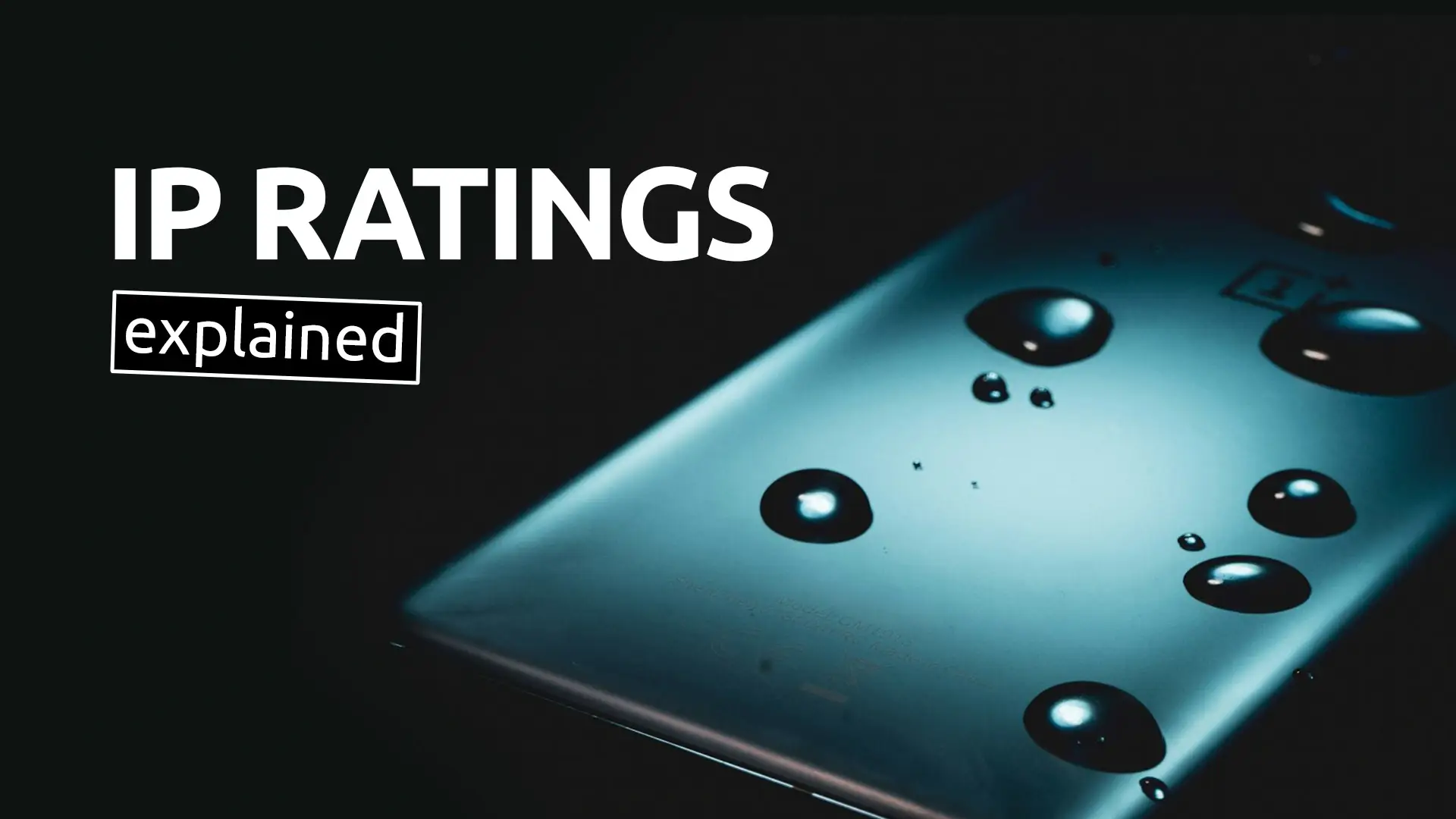
When you see a smartphone advertised with something like IP67 or IP68, it refers to its IP (Ingress Protection) rating. This rating tells you how well the device is protected against dust and water.
The IP rating has two numbers:
Example: IP68
First number (6) – Protection against solid particles like dust
Second number (8) – Protection against water
While it is a popular standard often mentioned in smarpthone industry, it is used for a wide range of technologies and machinery, not exclusively for smartphones. This is why some of the possible rating numbers have nothing in common with the smartphone industry.
What do the Numbers Mean?
Dust protection level (first number):
0 – No protection against dust or solid objects
1 – Protection against objects larger than 50 mm (for example, accidental hand contact)
2 – Protection against objects larger than 12.5 mm (such as fingers)
3 – Protection against objects larger than 2.5 mm (tools, thick wires)
4 – Protection against objects larger than 1 mm (most wires and small tools)
5 – Limited dust protection (some dust may enter, but not enough to affect operation)
6 – Completely dust-tight
Water protection (second number)
0 – No protection against water
1 – Protection against vertically falling water droplets
2 – Protection against dripping water when the device is tilted up to 15°
3 – Protection against spraying water
4 – Splash resistant from any direction
5 – Protected against low-pressure water jets
6 – Protected against powerful water jets
7 – Can survive temporary immersion (up to about 1 meter for 30 minutes)
8 – Can survive deeper water for longer periods (exact depth depends on the manufacturer)
9 / 9K – Protection against high-pressure and high-temperature water jets (mostly used for industrial equipment)
The Most Common Ratings
IP67 – Dustproof and can survive water up to 1 meter for 30 minutes
IP68 – Dustproof and can handle deeper water (often 1.5–6 meters depending on the phone)
Important to Know
Even phones with high IP ratings are not truly waterproof. The rating is tested in controlled lab conditions, usually with fresh water. Saltwater, pool chemicals, drops, and wear over time can reduce the protection.
Is this rating official?
Yes, the IP rating is an official international standard defined by the IEC (International Electrotechnical Commission) under the IEC 60529 specification. This standard is used globally to classify how well electronic devices are protected against solid particles like dust and liquids like water. Manufacturers must test their products according to defined procedures before they can claim a specific IP rating, which helps ensure the numbers mean the same thing across different brands and devices.
How is the rating tested?
IP ratings are determined through controlled laboratory tests. For dust resistance, devices are placed inside special chambers filled with fine dust particles to see whether dust can enter the enclosure. For water protection, different methods are used depending on the level being tested, such as dripping water, spraying water from multiple directions, water jets, or fully submerging the device in a tank for a specific amount of time and depth. These tests are performed under precise conditions, which means real-world results can vary depending on factors like drops, wear, or exposure to salt water.
Are there other rating standards, or is IP the only one?
While the IP system is the most widely used standard for smartphones and consumer electronics, it is not the only protection rating system. Some devices, especially rugged phones and military equipment, are also tested under MIL-STD-810, a military standard developed by the U.S. Department of Defense that evaluates durability against conditions such as extreme temperatures, shock, vibration, humidity, and dust. However, MIL-STD testing focuses more on overall durability rather than strictly measuring water and dust ingress, which is why IP ratings remain the primary standard used for water and dust resistance in smartphones.
![Apple Comes With Tons of New Gadgets [New Macbooks, iPads, Studios, etc]](https://trendsplace.tech/wp-content/uploads/2026/03/new-apple-devices-spring-event.webp)

Leave a Reply