
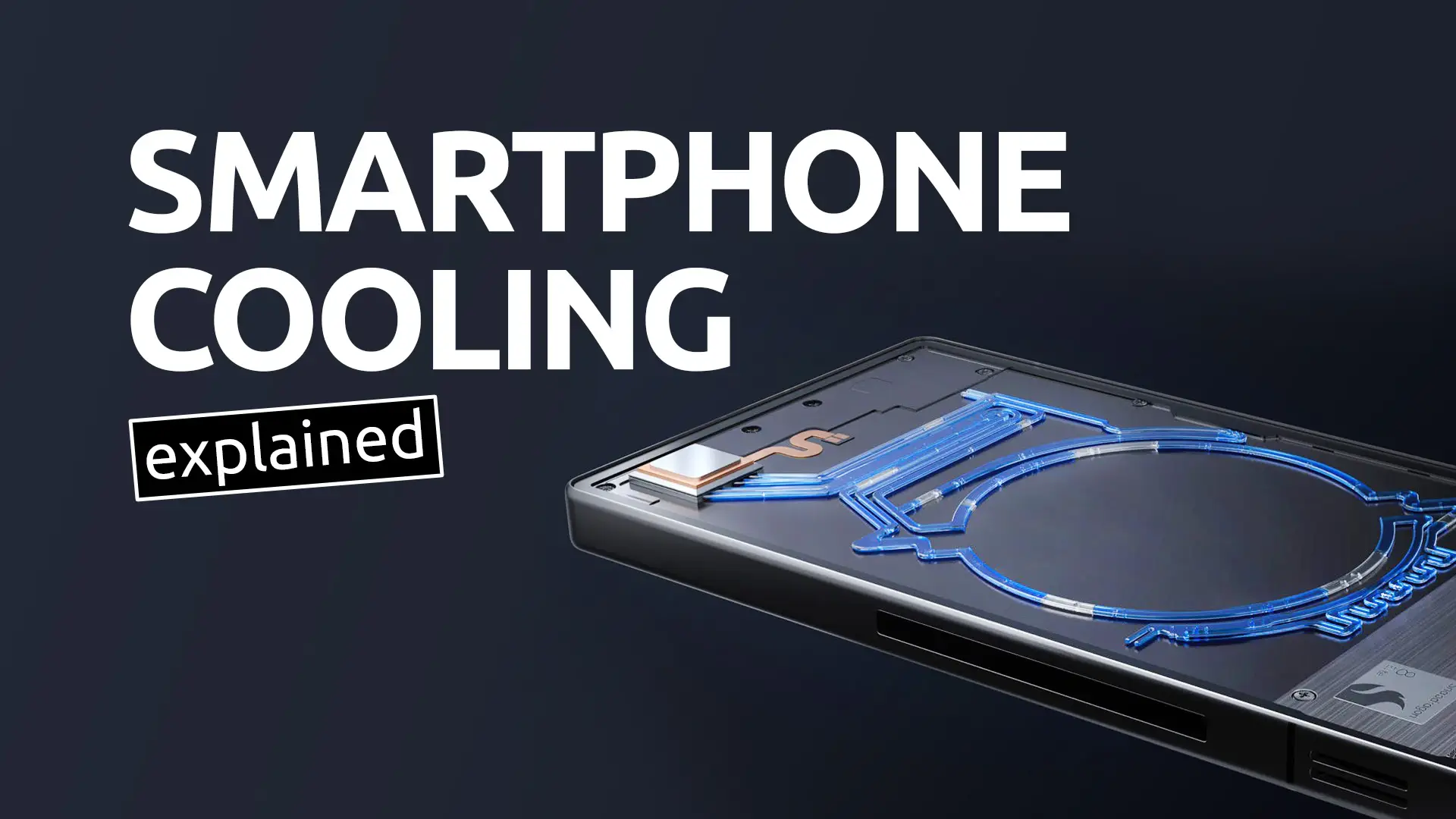

Modern smartphones contain extremely powerful processors that can generate significant heat, especially during gaming, video recording, or intensive multitasking. To maintain stable performance and prevent overheating, manufacturers now implement different cooling technologies inside their devices. And if you are planning to use your next smartphone for heavy tasks, you should definitely learn about the types of smartphone cooling.
Smartphones are designed to be as thin and lightweight as possible, and to be convenient to hold in the hand, so traditional fans and cooling systems should be adapted and modified, or replaced entirely with innovative solutions. Let’s explore the different smartphone cooling technologies:
1. Graphite Cooling
One of the most common cooling solutions in smartphones is the graphite heat spreader. Graphite sheets are thin layers of highly conductive material placed above the processor and other hot components. Their purpose is to spread heat across a larger area, preventing hot spots from forming in one specific location.
This solution is very thin and inexpensive, which is why it is widely used in mid-range and budget smartphones.
2. Copper Heat Pipes
Some smartphones use copper heat pipes, which are small sealed tubes containing a tiny amount of liquid. When the processor heats up, the liquid inside the pipe evaporates and moves toward the cooler part of the tube. As it cools, it condenses back into liquid and returns to the hot area. This continuous cycle helps transfer heat away from the processor much faster than simple heat spreaders.
Heat pipes are often found in gaming phones and high-performance flagship devices.
3. Vapor Chamber Cooling
A vapor chamber is an advanced version of a heat pipe and is considered one of the most effective cooling systems in smartphones. Instead of a narrow tube, a vapor chamber is a flat sealed metal plate filled with liquid. When heat builds up, the liquid inside evaporates and spreads across the entire chamber before condensing again.
This allows heat to distribute more evenly across the device, helping maintain stable performance during heavy workloads like gaming or 4K video recording.
4. Active Cooling
A small number of gaming-focused smartphones use active cooling, which involves tiny internal or external fans that move air through the device. Active cooling can significantly reduce temperatures during long gaming sessions and allow processors to maintain higher sustained performance.
Because fans require additional space and power, this solution is mostly found in gaming-oriented devices rather than typical smartphones.
The role of thermal gel & thermal paste
Smartphones also use thermal interface materials, such as thermal paste or thermal gel, between components and cooling systems. These materials help improve heat transfer between the processor and the cooling solution by filling microscopic air gaps. Without them, heat would not move efficiently from the chip to the cooling system.
Why Cooling Matters in Smartphones
Good cooling systems are important because smartphone processors automatically reduce their speed when temperatures become too high, a process known as thermal throttling. Efficient cooling helps devices maintain stable performance for longer periods, especially during demanding tasks like gaming, video editing, or extended camera use.
Without proper cooling, the overheating could affect battery life and performance, while extreme heat could even damage your display and other elements – luckily, smartphones are designed to turn off before such high temperatures are reached.
Final Thoughts
Smartphones are compact devices without traditional fans, and manufacturers need to use several clever cooling solutions to manage heat. While technologies such as graphite heat spreaders, copper heat pipes, and vapor chambers have proved themself as reliable solutions to manage heat, we are seeing more and more creative innovations such as the RedMagic 11 Pro’s complete cooling system, combining a vapor chamber with Heat Pipes.
But one thing is important – cooling is becoming better each year with all the innovations, combined with battery improvements and chipset optimizations. Soon, the term phone overheating might even disappear.
Want to explore more topics? Here are some articles you may like:







One response to “The 4 Types of Smartphone Cooling Explained”
Great article