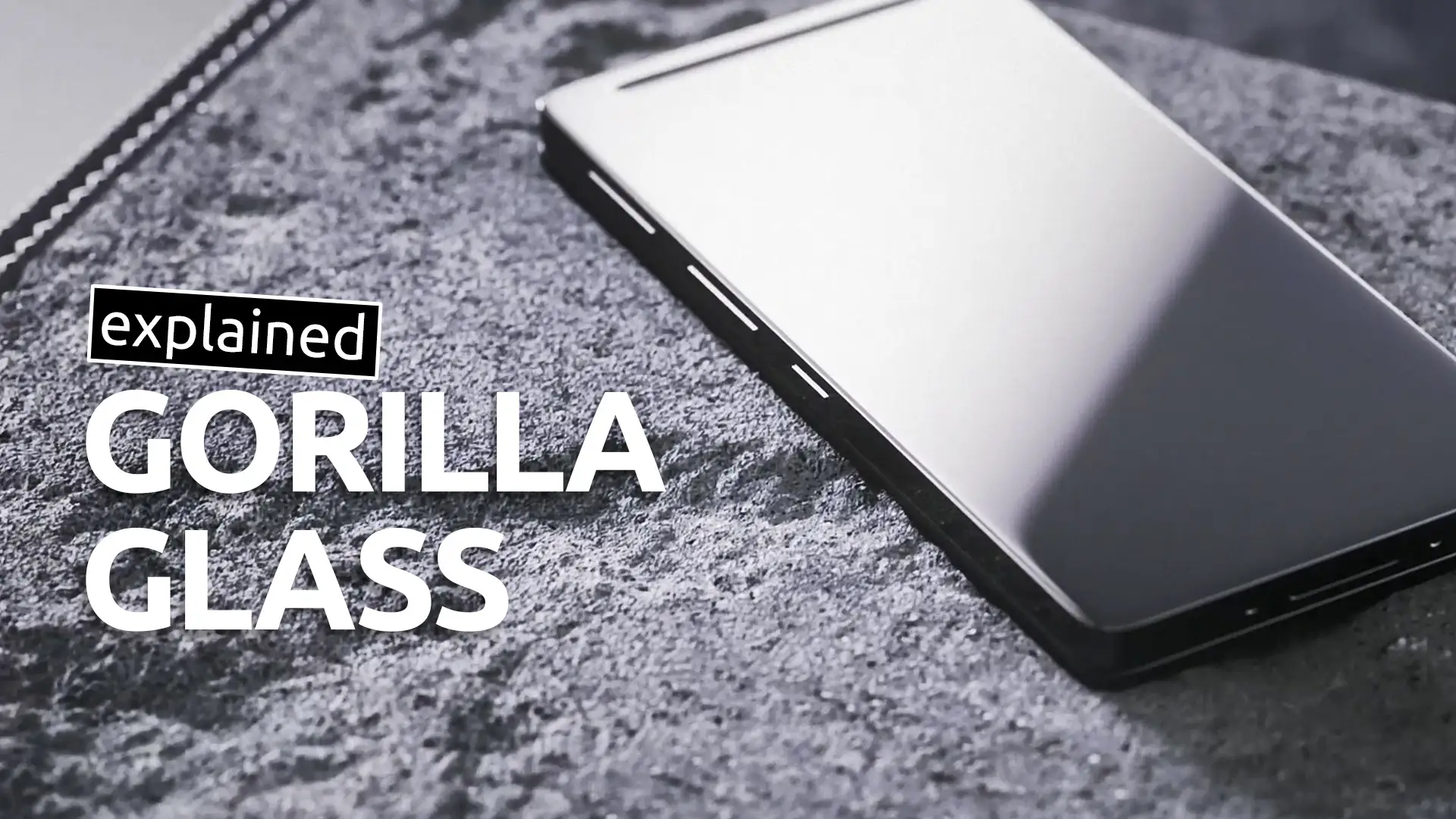

There are some pieces of our smartphones that are not so appreciated… and one of them is the Corning Gorilla Glass. While it is not visible, this is the cover glass on our smartphones, making the display durable and scratch-resistant. Yet most people don’t know what it is or how exactly it works. Let’s find out!
What Is Gorilla Glass?
Gorilla Glass is a special type of chemically strengthened glass used in smartphones, tablets, and other devices like smartwatches to protect displays from scratches and drops. It is developed by Corning, one of the leading materials science companies in the world.
Unlike regular glass, Gorilla Glass is designed to be thin, lightweight, and much more durable than usual glass, making it ideal for modern slim devices.
How Does Gorilla Glass Work?

Gorilla Glass is strengthened through a process called ion exchange.
During manufacturing, the glass is placed in a bath of molten salt. Smaller sodium ions inside the glass are replaced with larger potassium ions, which creates internal pressure (compression) on the surface.
This compression makes the glass:
– More resistant to cracks
– Harder to scratch
– Better at absorbing impact from drops
In simple terms, Gorilla Glass doesn’t just avoid breaking – it’s designed to withstand stress and distribute impact energy more effectively.
Gorilla Glass Generations Explained
Over the years, Corning has released multiple versions of Gorilla Glass, each improving durability and performance.
- Gorilla Glass 1 (2007)
The first generation introduced strong, thin glass for smartphones, helping enable the rise of the modern touchscreen displays.(The same year the first iPhone was introduced) - Gorilla Glass 2 (2012)
Improved on the original by making the glass thinner while maintaining strength, allowing slimmer mobile devices. - Gorilla Glass 3 (2013)
Focused on scratch resistance, introducing a technology called Native Damage Resistance to reduce visible scratches. - Gorilla Glass 4 (2014)
Designed to improve drop resistance, especially on rough surfaces like concrete. - Gorilla Glass 5 (2016)
Significantly improved drop protection, surviving falls from up to ~1.6 meters under ideal conditions. - Gorilla Glass 6 (2018)
Built to upgrade the long-term durability, the 6th gen could survive multiple drops rather than just one. - Gorilla Glass Victus (2020)
A major upgrade that improved both scratch resistance and drop protection at the same time – a balance that was difficult to achieve before. - Gorilla Glass Victus 2 (2022)
Further improved drop resistance, especially on hard surfaces like concrete, while maintaining strong scratch protection. - Gorilla Glass 7i (2024)
7i improves durability and scratch resistance and is targeted at mid-range devices. - Gorilla Armor (2024)
Focusing on reflection reduction and scratch resistance, Gorilla Armor is used in flagship phones, providing better display visibility.
Is Gorilla Glass Unbreakable?
No, of course, Gorilla Glass is not unbreakable. It is designed to be more resistant to scratches and drops, but under enough force or the right angle of impact, it can still crack or shatter. This is why many users still choose to use screen protectors or cases for extra safety.
Final Words
Gorilla Glass is one of the most important technologies behind modern smartphones, making large glass displays practical and durable. Through chemical strengthening and continuous improvements across generations, it helps protect devices from everyday damage.
Want to explore more technologies? Here are some interesting topics you may like: