This content is not created to promote affiliate products or paid placements. Any monetization, when present, does not influence what we cover or how we review products.
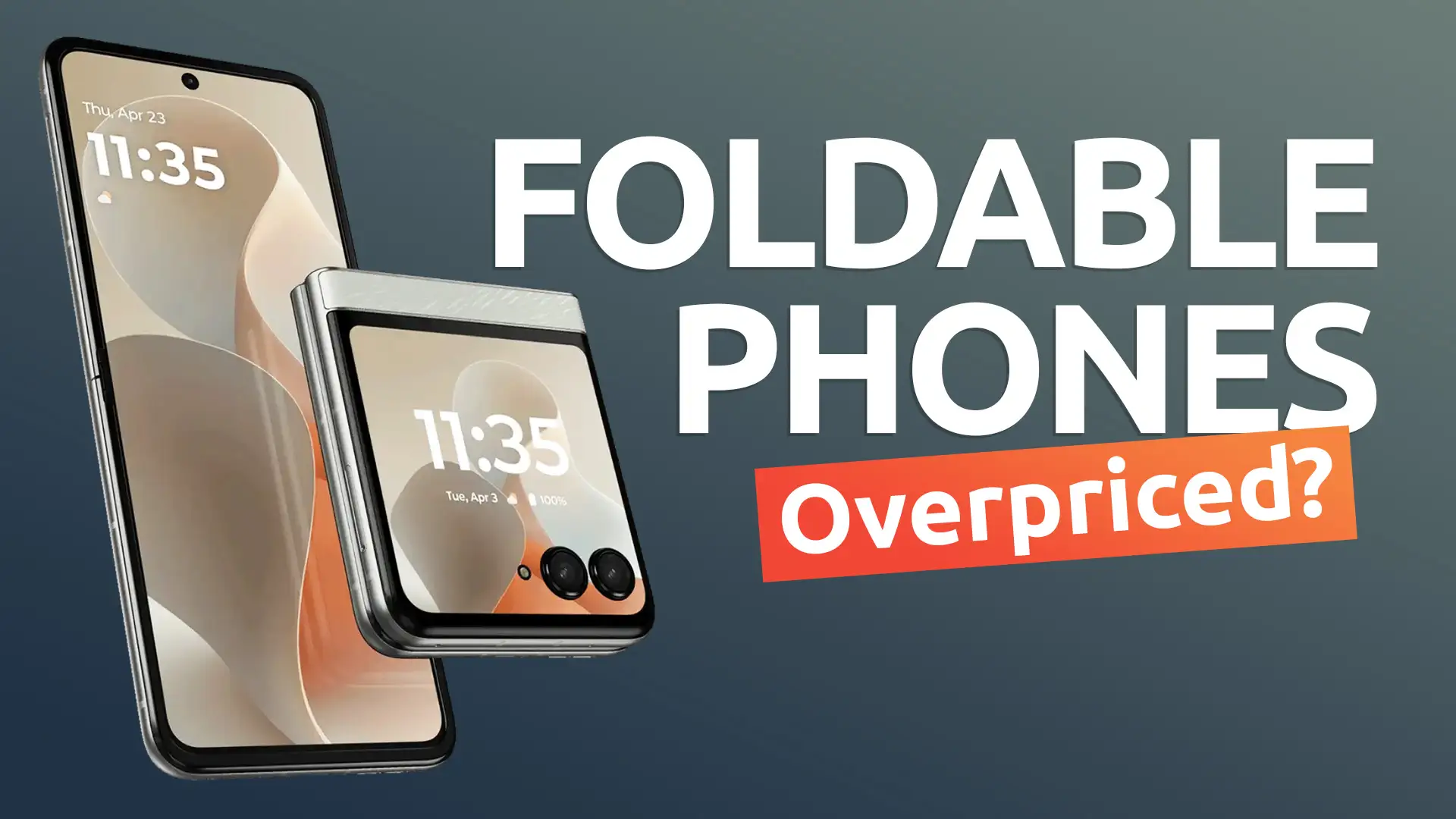
Foldable phones are the coolest gadgets in the smartphone world right now – they bend, flip, and unfold into mini tablets like magic.
The kind of futuristic tech we used to see only in sci-fi movies. But as exciting as they are, there’s one thing that still makes people hesitate – yes, the price tag.
For example, the Galaxy S25 Ultra starts from $1,299.99, as the Galaxy Z Fold 7 Starts from $1,999.99.
So, why do these phones cost so much more than regular smartphones? Let’s break it down in simple terms.
1. The Display Technology Is Wildly Advanced
At the heart of every foldable phone is the foldable OLED display – its most complex and expensive component.
Unlike traditional screens made from rigid glass, foldable displays use ultra-thin flexible materials that can bend thousands of times without breaking.
These screens are difficult to produce, and even small manufacturing defects can ruin the entire panel. To make sure each one meets quality standards, companies have to use extremely precise production methods, which drives up costs.
And don’t forget – foldable screens also need special protective layers, anti-crease coatings, and durable hinges to keep them working smoothly. It’s a mix of cutting-edge engineering & careful craftsmanship.
2. The Hinge Is a Mini Engineering Masterpiece
That smooth folding motion you love?
Foldable phone hinges are made up of hundreds of tiny parts that allow the device to open and close repeatedly without breaking or letting dust inside. It’s not magic – it’s mechanical perfection.
Designing and testing these hinges takes years of research. Samsung, for example, has spent nearly a decade perfecting its “Flex Hinge,” and every other brand – from Motorola to Honor and OnePlus – has its own take on the problem.
The hinge must be strong enough to last over 200,000 folds, thin enough not to add bulk, and tight enough to protect the fragile display inside. That level of precision costs money.
3. The Materials Are Premium
Foldable phones don’t just use flexible displays – they also need flexible components inside.
Manufacturers have to redesign batteries, circuit boards, and literally every part to fit into two separate halves connected by a moving joint. Many of these parts are custom-built for each model, unlike the standardized components in regular smartphones.
Add premium outer materials like armor, aluminum, and Gorilla Glass Victus, etc, and you’re looking at a device built from the most advanced materials on the market.
4. Production Volume Is Still Low
Foldables are still a niche category, meaning brands don’t sell them in the same huge numbers as traditional phones.
When production is smaller, manufacturing costs per unit stay high because the companies can’t spread expenses over millions of devices.
In other words, until foldables become truly mainstream, the price won’t drop dramatically.
5. Extra R&D and Testing
Every new foldable model goes through rigorous testing to make sure it can handle real-life use. That includes:
- Folding tests at different temperatures
- Dust & water resistance (a major challenge for moving parts)
- Screen durability against scratches and pressure
On top of that, the companies pour millions into research and development each year to make foldables thinner, lighter, and more reliable. You’re not just paying for a phone – you’re helping fund the next generation of tech.
6. They’re Still a Luxury Product
Finally, let’s be honest – foldable phones are still luxury items. They represent the cutting edge of mobile innovation, and that kind of tech always comes with a premium price.
Just like how early flat-screen TVs or the first iPhones were priced high before becoming mainstream, foldables are following the same path.
You’re paying not only for the hardware but also for the wow factor – the feeling of owning a glimpse of the future.
So, Are Foldable Phones Overpriced?
Well, partly – yes. The main reason is that there’s still not enough competition to push prices down. Only a handful of brands are seriously investing in foldables, and when the market is that small, there’s little pressure to cut costs. But at the same time, these devices aren’t just regular phones – they’re the result of years of research, design experiments, and expensive new manufacturing processes. From flexible OLED panels to ultra-thin hinge mechanisms, every part of a foldable phone is more complex and costly to produce. So while the price might seem high now, it’s also what fuels the innovation needed to make the next generation better and more affordable in the long run.
When Will Foldables Get Cheaper?
Good news – prices are already starting to drop. Brands like Honor, OnePlus, and Tecno have begun releasing foldables under $1,000, which is a big step forward. As more manufacturers enter the market and production scales up, we’ll see prices continue to fall.
Within the next few years, foldables could become as affordable as today’s premium flagship phones.
Conclusion
Foldable phones are expensive for a reason – they’re the result of cutting-edge design, high-end materials, and years of innovation packed into one sleek device. While they might not be for everyone just yet, they represent where smartphone technology is heading.
So, the next time you see a foldable phone and gasp at the price, remember – you’re looking at the future of mobile tech, and the future always starts with a premium.
Want to explore more exciting tech? Here are some related articles you may like:
- 10 Upcoming Smartphones in 2026 That Will Change The Game!
- The Next Smartphone Batteries Will Cause a Revolution!
- 7 Best Foldable Phones To Get in 2026
- When Could We Expect The Foldable iPhone To Be Released?
FAQ
Why do foldable screens crease?
Because the display bends in the same spot repeatedly, a small crease forms over time – it’s normal and doesn’t affect performance.
Do foldable phones have worse battery life?
Not necessarily. Some models even have dual-battery designs to balance both halves of the phone, giving decent battery performance.
Are foldables more fragile?
They’re more complex, yes – but modern foldables come with strong hinges, and tougher ultra-thin glass that’s far more durable than early versions. The first water-resistant foldable phone was also released recently – Google Pixel 10 Pro Fold.
Will foldable phones ever be cheap?
Definitely! As production improves and demand grows, prices will drop – just like with any new tech.
Our Editorial Process
This article was created by the TrendsPlace editorial team.
We only use AI tools to assist with drafting and efficiency, while all content is researched, reviewed, edited, and finalized by humans to ensure accuracy and quality.
![Apple Comes With Tons of New Gadgets [New Macbooks, iPads, Studios, etc]](https://trendsplace.tech/wp-content/uploads/2026/03/new-apple-devices-spring-event.webp)