
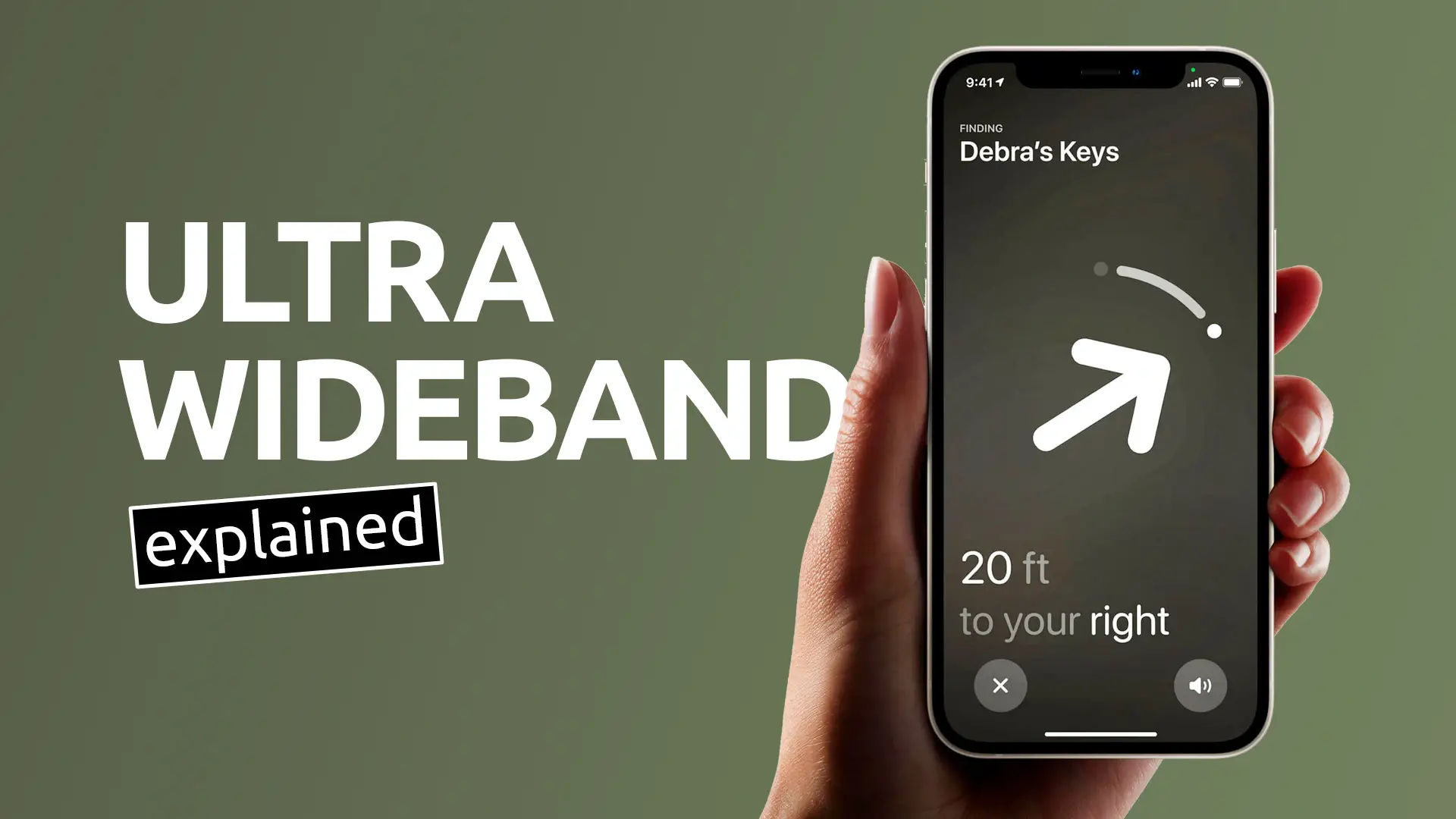
UWB (Ultra Wideband) is a short-range wireless communication technology that allows devices to measure distance and location with extremely high precision. Unlike technologies such as Bluetooth or Wi-Fi that mainly focus on transferring data, UWB is designed to determine exact spatial positioning between devices.
Because of this, UWB is commonly used for features like digital car keys, precise device tracking, smart home automation, and all kinds of object location systems.
How UWB Works
UWB works by sending very short radio pulses across a wide range of frequencies. By measuring how long it takes for these signals to travel between devices, UWB can calculate the exact distance and direction between them. This technique is known as Time of Flight (ToF) measurement.
Where UWB Is Used
UWB technology is becoming more popular in modern consumer electronics and smart devices. It’s the technology that lets us see in which direction our Apple AirTag is in Find My, calculating that it’s just a few meters away.
Common applications include:
Digital car keys – Newer cars allow smartphones to unlock doors automatically when the owner approaches. UWB helps verify that the phone is physically near the vehicle(and near which door), improving both convenience and security.
Device tracking systems – Tracking devices like Apple Airtag can use UWB to locate items like keys, bags, or luggage with high accuracy.
Smart home automation – UWB can detect exactly where a person is inside a room, allowing lights, speakers, and devices to turn on/off based on proximity, or to for speakers to focus the audio based on your position.
Why UWB Is More Accurate Than Bluetooth
Many wireless technologies can detect nearby devices, but UWB is significantly more precise. Bluetooth-based tracking usually estimates distance based on signal strength(1–10 meters), which can be affected by walls, interference, or device orientation.
UWB instead calculates actual signal travel time, making it much more reliable for location tracking.
Is UWB Safe?
UWB uses very low-energy radio signals spread across a wide frequency spectrum. Because of this, its transmission power is extremely low and well within international safety standards. In fact, UWB signals are weaker than common Wi-Fi signals, making them safe for everyday consumer devices.
Want to learn more about technologies? Here are some more things you may like:

Leave a Reply