
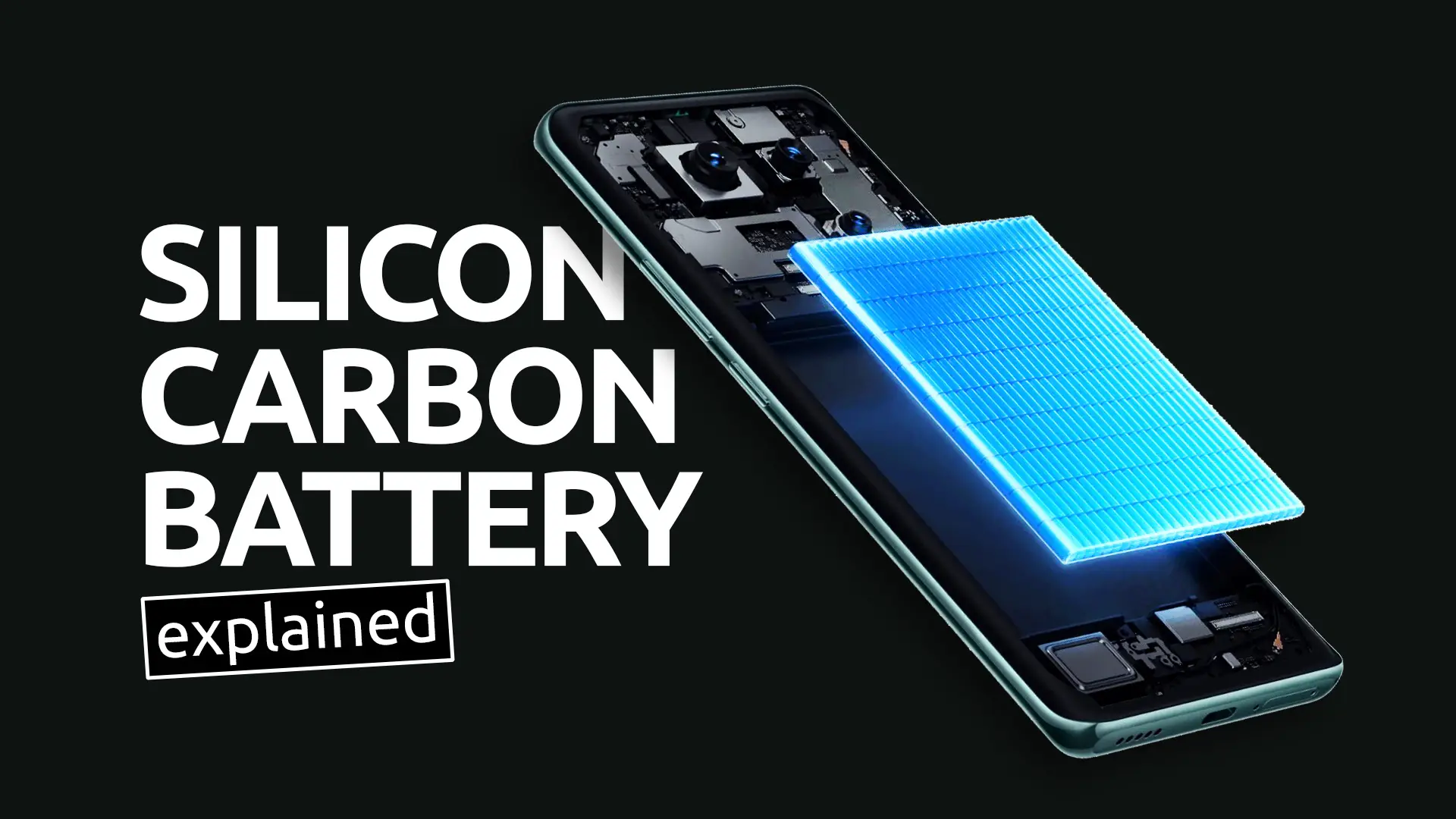
Battery technology is one of the key areas where smartphone manufacturers are trying to improve performance, and it wouldn’t be an exaggeration to say it is one of the most important fields where humanity is seeking breakthroughs. From EVs to robotics – every modern gadget uses a battery. And Silicon-Carbon batteries are one of the biggest advancements in recent years.
So, what is a Silicon-Carbon battery, and is it good or bad for our phones?
What Is a Silicon-Carbon Battery?
A silicon-carbon battery is a type of lithium-ion battery that replaces part of the traditional graphite anode with silicon and carbon materials.
In a standard lithium-ion battery, the anode (the negative electrode) is usually made from graphite. Silicon, however, can store significantly more lithium ions than graphite, which means it can potentially increase the amount of energy stored in the battery with the same size.
By combining silicon with carbon, manufacturers can create a battery that offers:
- Higher energy density
- Larger capacity in the same space
- Potentially longer battery life
This is why some smartphones today can offer 5,500 mAh or even 6,000 mAh batteries without becoming thicker or heavier.
Is There a Difference from Traditional Lithium-Ion Batteries?
While both battery types rely on the same lithium-ion chemistry, the key difference lies in the anode material. Traditional lithium-ion batteries use graphite anodes, which are stable and widely used but have limited energy capacity.
Silicon-Carbon Battery introduces silicon particles into the anode structure, allowing the battery to store more lithium ions and therefore more energy.
However, silicon expands significantly when charging, which makes it difficult to use in batteries. This is why silicon is in limited amounts, and carbon comes into play to absorb the silicon expansion.
Why Manufacturers Are Using Silicon-Carbon Batteries
The biggest advantage of this technology is higher energy density, which gives more freedom for developing future tech products. They can experiment with slimmer devices, while keeping battery life the same, or create new smartphones that can give you multiple days of battery life.
Silicon-Carbon battery allows manufacturers to:
– Increase battery capacity without making phones thicker
– Improve battery life, especially in extreme conditions
– Support faster charging technologies (up to 5x times faster)
– Design slimmer devices with larger batteries
Because of these benefits, silicon-carbon batteries are becoming increasingly popular in modern smartphones.
Is a Silicon-Carbon Battery Dangerous?
Despite the use of new materials, silicon-carbon batteries are not inherently more dangerous than traditional lithium-ion batteries.
They still follow the same safety principles used in modern rechargeable batteries, including:
- Temperature monitoring
- Overcharge protection
- Battery management systems
- Voltage regulation
In normal use, a silicon-carbon battery should be just as safe as a traditional smartphone battery. Manufacturers carefully test these batteries to ensure they meet safety standards before being used in consumer devices. After the 2016 situation with Samsung’s exploding batteries, be sure no company is risking its future for unproven technology.
Are There Any Downsides?
While silicon-carbon technology offers clear advantages, it also comes with some challenges.
One issue is that silicon expands and contracts during charging cycles, which can cause wear over time if not properly managed. Battery manufacturers use advanced materials and structural designs to balance this effect.
Where Silicon-Carbon Batteries Are Used
Silicon-carbon batteries are currently most common in modern smartphones, but the technology is also being explored for other devices. With the improvement of the technology, we may soon see these batteries coming to wearable tech, laptops and tablets, electric vehicles, and all kinds of portable electronics – from flashlights and solar lighting all the way to portable fridges.
As battery technology continues to evolve, silicon-based materials are expected to play an increasingly important role in improving energy density. Yet, there are more exciting new battery types scientists are working on, check them out.
![The Evolution of Mobile Phones [1983-Now]](https://trendsplace.tech/wp-content/uploads/2026/03/evolution-of-smartphones-history.webp)

Leave a Reply